
Dr. Massuca
Ultrassonografia e IA na medicina · CRM-GO 17475
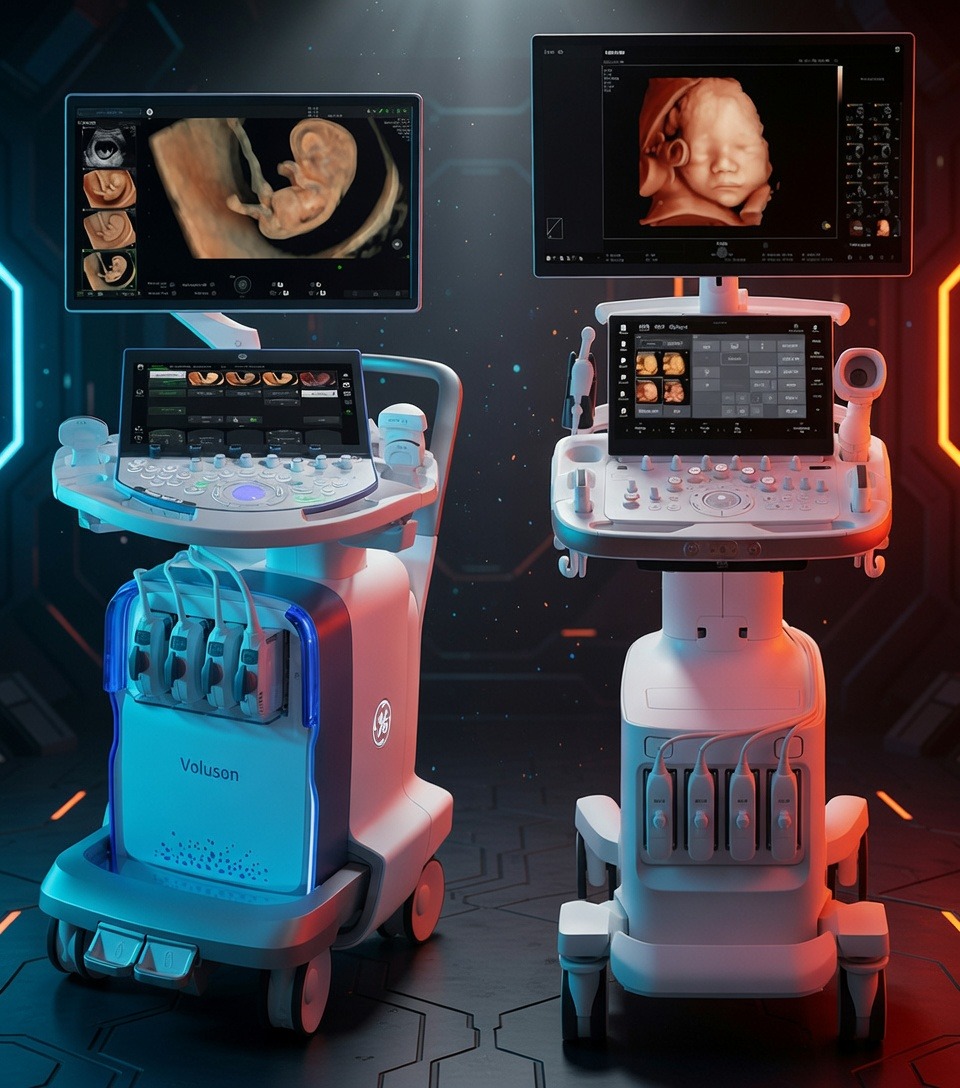
Samsung HERA Z20 vs. GE Voluson Expert 22: the definitive duel in premium obstetric ultrasound
I tested the two most advanced devices in the world for fetal morphology at the This Is Us 2026 congress — and brought specs that do not exist in any public publication
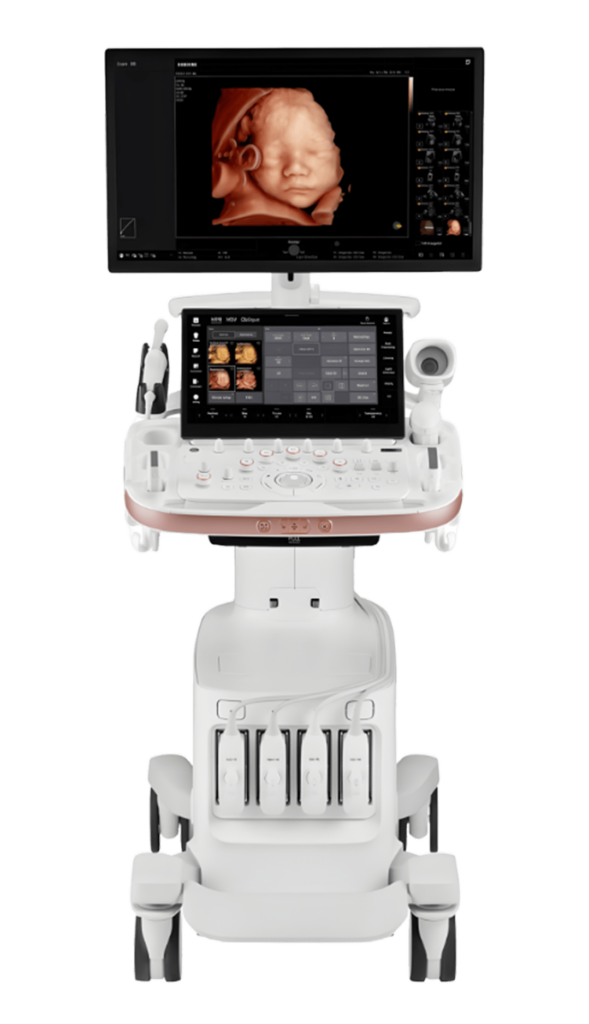
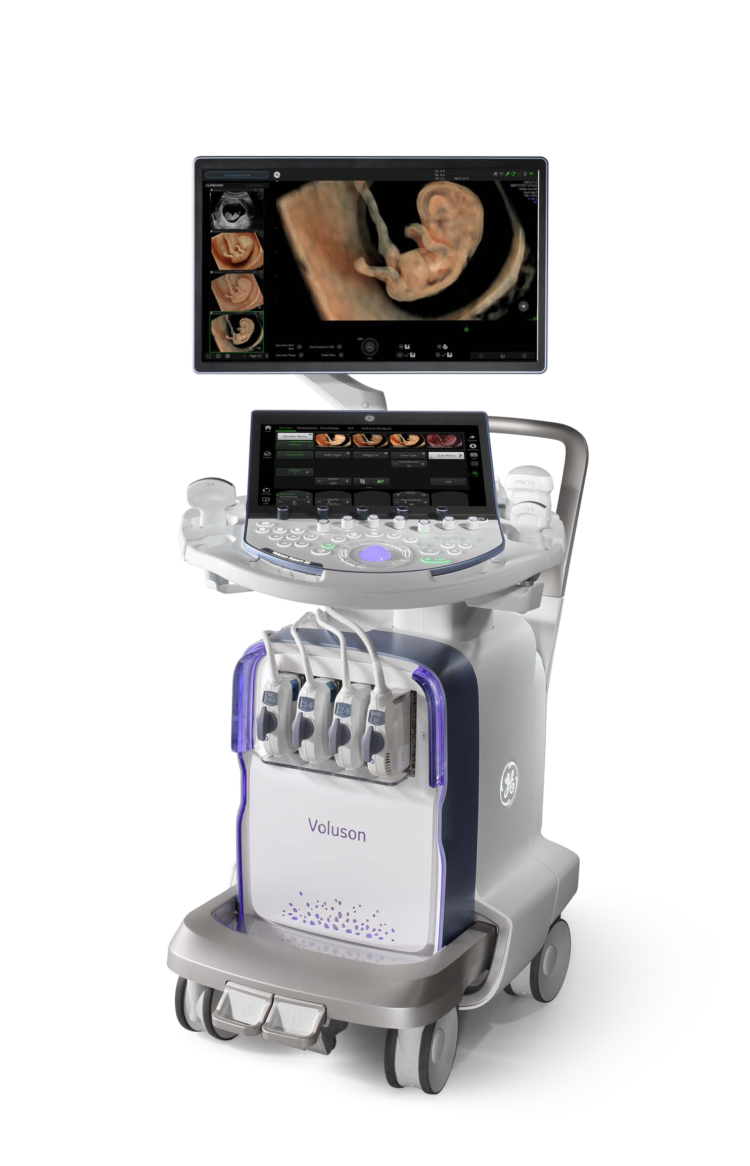
Acknowledgment note: The NEXUS School is not just the venue for this review — it is a nationally renowned institution in specialized medical training in ultrasonography, of which the author is a former student. Founded in 2017 in Brasilia, NEXUS brings together a faculty of masters and PhDs who are references at the country's major congresses, with a methodology based on real clinical practice with patients. Special thanks go to Dr. Jose Paulo da Silva Netto, gynecologist, co-founder and academic coordinator of the school, whose generous welcome at the This Is Us 2026 congress made possible the unrestricted access to the equipment for the preparation of this comparison. Equally, to Dr. Evaldo Trajano de Souza Silva Filho, co-founder and medical director, for building a space that genuinely respects the experienced specialist.
1. Hardware: what's inside the box
Samsung HERA Z20 — Crystal Architecture 2nd Generation
The HERA Z20 operates on the Crystal Architecture 2nd Generation, combining three pillars: CrystalBeam (advanced software beamforming), CrystalLive (2D/3D processing engine) and S-Vue transducers (single crystal wideband) [3,4]. The system incorporates software-based processing that replaces dedicated hardware beamformers [1].
The data below were verified and confirmed with Samsung, obtained before official authorization for disclosure. The source is not identified in this publication.
| Component | Samsung HERA Z20 |
|---|---|
| CPU | 11th Gen Intel Core i5-11500HE @ 2.60 GHz (Tiger Lake) Newer |
| GPU_0 | NVIDIA RTX A4000 |
| GPU_1 | NVIDIA Quadro T1000 |
| GPU_2 | Intel UHD Graphics (integrated) |
| RAM | 32 GB — double the GE Advantage |
| Storage | M.2 NVMe SSD 2 TB |
| 3D Function | Motor Board: PRESENT (confirms mechanical STIC) |
| Auxiliary touchscreen | 15.6" with tilt control Confirmed |
| Warranty | 5 years on console Confirmed |
GE Voluson Expert 22 — Lyric Architecture with dual-GPU confirmed onsite
The Expert 22 introduced the Lyric Architecture, replacing the Radiance System Architecture of the Voluson E10 [7,14]. The differentiator is Graphic-Based Beamforming — the conventional beamformer was replaced by GPU-based processing, with computational flexibility and software upgrade capability [7,8].
The data below were collected directly from the System Info screen of the device exhibited at the congress. This is unprecedented information — not available in any public publication:
| Component | GE Voluson Expert 22 BT25 — confirmed onsite |
|---|---|
| CPU | Intel64 Family 6 Model 158 @ 2.496 MHz (Comet Lake — equiv. i7-10700) |
| GPU Beamforming | NVIDIA RTX A4000H — dedicated professional GPU Confirmed |
| GPU Interface/UI | NVIDIA T1000 8GB GDDR6 — dedicated display GPU Confirmed |
| RAM | 16,384 MB (16 GB) |
| Storage | NVMe — 123h of use (manufactured Oct 21, 2025) |
| OS | Windows 10 IoT Enterprise 2021 LTSC (Build 19044.6332, version 21H2) |
| DICOM | MergeCom3 – 5.18.0.0 |
| Remote telemetry | PTC Axeda Agent 6.9.1-1046 (GE InSite) |
The most revealing finding is the dual-GPU architecture: the RTX A4000H exclusively processes the graphic beamforming, while the T1000 exclusively manages the interface and display. Both pipelines have their own dedicated GPU — neither competes for resources with the other, which is critical in real-time 4D processing [7].
What the Expert 22 GPUs cost at Brazilian retail
The premium price of a high-end ultrasound device is not in the off-the-shelf hardware: it's in the regulatory certifications (ANVISA, FDA), the proprietary beamforming firmware, the exclusively engineered transducers, the clinical validation, and the support infrastructure. The hardware is the vehicle; the value is in the software and embedded knowledge.
Specifications comparison
| Specification | Samsung HERA Z20 | GE Voluson Expert 22 |
|---|---|---|
| Architecture | Crystal Architecture 2nd Gen | Lyric Architecture |
| Main GPU | NVIDIA RTX A4000 ✓ | NVIDIA RTX A4000H |
| Secondary GPU | NVIDIA Quadro T1000 ✓ | T1000 8GB GDDR6 |
| Additional GPU | Intel UHD (integrated) | — |
| CPU | Intel i5-11500HE @ 2.60 GHz (Tiger Lake — 11th Gen) Newer | Intel Comet Lake @ 2.496 MHz (10th Gen) |
| RAM | 32 GB 2x larger | 16 GB |
| Storage | M.2 NVMe SSD 2 TB | NVMe 2 TB HDD |
| Frame rate B-mode | Not published | >3,000 fps ✓ |
| Dynamic Range | Not published | up to 418 dB ✓ |
| Monitor | OLED 27" WQHD (2560×1440) ✓ | LCD 23.8" Full HD (1920×1080) |
| Auxiliary touchscreen | 15.6" with tilt ✓ | 15.6" without tilt |
| Warranty | 5 years ✓ | 2 years |
| Price Brazil | ~R$ 500,000 | ~R$ 650,000 |
2. Software and image processing
Both platforms deliver high image quality resulting from their beam-forming architectures, processing algorithms, and noise reduction, signal-to-noise ratio enhancement, and acoustic shadow suppression features. What distinguishes the Samsung HERA Z20 in this generation is the use of Software Beamforming (SWBF) — the ultrasonic beam formation is performed via GPU programming (RTX A4000), instead of conventional dedicated hardware. This architecture enables a feature that until recently was impractical in commercial equipment: the capture of the third harmonic — perhaps the most surprising finding of the Z20 in this review.
What are harmonics in ultrasound
When the transducer emits a fundamental frequency — say, 5 MHz — the tissue does not respond only at that frequency. It generates harmonics: multiples of the original frequency (10 MHz, 15 MHz, etc.). Conventional ultrasound used only the fundamental signal. The second generation brought 2nd harmonic (THI — Tissue Harmonic Imaging), now standard in any modern device: fewer artifacts, more contrast, better edge definition. The 3rd harmonic (three times the fundamental frequency) goes further: even narrower beam, superior lateral resolution, and virtually zero sidelobe artifacts.
The technical challenge is twofold: the 3rd harmonic signal has a frequency 3x higher than the fundamental, but much lower amplitude — and it is precisely this signal that is "wasted" in most equipment. Capturing it requires a robust sampling rate (5 to 10 times higher than the maximum signal frequency) to ensure accurate reconstruction without distortion or aliasing. It is the SWBF with GPU that enables this sampling and processing capability — something that conventional dedicated hardware cannot achieve with the same computational flexibility.
Third harmonic on the Samsung HERA Z20 — exclusive onsite observation
The Samsung HERA Z20 is capable of capturing and utilizing the 3rd harmonic component in specific presets of the CA1-7S (convex) and EV2-12 (endocavitary volumetric) transducers — both using S-Vue (Single Crystal) technology. When active, the system displays a discrete indicator on the HUD. The image improvement is noticeable primarily in the definition of high-frequency structures in the near field — exactly the scenario of fetal neurosonography with endocavitary transducer, where the fetal brain is close and the higher frequency is sustainable.
In onsite practice, fetal neurosonography comparisons showed superior sharpness in the cerebral cortex with the 3rd harmonic active — a real difference, more subtle than conventional harmonic activation, but clinically perceptible for those who know the anatomy. Physics imposes the limit: higher frequencies attenuate more rapidly, making the feature less effective in the far field or in patients with elevated BMI. For fetal neurosonography with endocavitary transducer and fetus in cephalic presentation, the brain is sufficiently close for the 3rd harmonic to be sustained.
Published studies document that the 3rd harmonic provides an improvement of up to 46% in lateral resolution compared to fundamental and 28% compared to the 2nd harmonic [IEEE Xplore, 2012]. Canon Medical (Aplio line) was the first to formalize the technology as a commercial product using a deep learning filter to extract the signal. The Z20 implements its own solution with similar behavior — a finding observed exclusively in this review, during the This Is Us 2026 congress.
3. Volumetric transducers: CMV1-10 versus eM6C G3
The volumetric transducer is the heart of any premium obstetric ultrasound device. Here, the competition is fierce.
Samsung CMV1-10 — single crystal matrix array
The CMV1-10 is the new flagship transducer of the Z20: a convex volume matrix array with S-Vue technology (single crystal), covering 1–10 MHz bandwidth [2,3,4]. This bandwidth is remarkable — it allows from deep penetration in patients with elevated BMI to fine resolution for fetal anatomical details. Samsung does not publish the number of elements, which is a significant gap for technical comparison.
GE eM6C G3 — 8,192 electronic elements
The eM6C G3 is the third generation of GE's electronic matrix probe, with 8,192 elements in an active 2D matrix array, operating at 2–6 MHz [7,8]. The main advantage: being a pure electronic array (no mechanical motor), it enables eSTIC — instantaneous STIC capture in ~3 seconds (versus 7–15 seconds in mechanical probes) [8,9,21]. Real-time 4D volumes with Color Doppler, Bi-Plane and Bi-Plane CRI are exclusive to the eM6C G3.
Comparison — transducers
| Feature | Samsung CMV1-10 | GE eM6C G3 |
|---|---|---|
| Type | Convex Volume Matrix Array | Electronic Matrix Array 2D |
| Elements | Not disclosed ? | 8,192 ✓ |
| Frequency | 1–10 MHz Wider band | 2–6 MHz |
| Single crystal (S-Vue) | Yes | — |
| STIC | Mechanical (7–15s) | Electronic eSTIC (~3s) 3x faster |
| Bi-Plane | Not available | Yes ✓ |
| Real-time Color 4D | Yes | Yes (with eSTIC) |
Technical opinion: The eM6C G3 is superior in fetal echocardiography thanks to eSTIC and Bi-Plane — the instantaneous cardiac capture without motion artifact is transformative [8,9,21]. The wider bandwidth of the CMV1-10 (1–10 MHz vs. 2–6 MHz) favors Samsung in clinical versatility and penetration in patients with elevated BMI [2,3]. For routine fetal morphology, both are excellent.
4. Embedded artificial intelligence: two opposing philosophies
Visual comparison — Capabilities Radar
Samsung HERA Z20 — continuous AI and radical automation
The central feature is Live ViewAssist: deep learning-based AI that operates continuously during the exam, without operator interaction [1,5,6]. It automatically identifies and captures 39 standard planes, annotates 47 anatomical structures and performs 46 essential measurements in real time [5,6]. Samsung claims a reduction of up to 94% in keystrokes in a detailed 2nd trimester exam — a powerful claim, but based on internal data (data on file), not on a peer-reviewed study [5,6].
The FDA validation (510(k) K241971, October 2024) documented Dice scores >0.87 for segmentation and recognition accuracy >94% in diverse datasets [17].
- BiometryAssist (base): semi-automatic biometry — the operator selects the structure and the system performs the measurement [2,4]
- ViewAssist (base): automatic biometry — just press the measurement key and the system automatically recognizes the structure
- HeartAssist (base): automatic classification of fetal cardiac planes, measurements and Z-Scores [2,3,4]
- Live ViewAssist (standard): real-time ViewAssist — 39 continuous planes, 47 structures, 46 measurements without interaction [5,6]
- 5D CNS+ (standard): 6 measurements in 3 transverse planes of the fetal brain [3,4]
- 5D NT (optional): automatic nuchal translucency [4]
- EzVolume (standard): 3D segmentation of placenta, amniotic fluid, fetal face with color coding [3,4]
- EzCheck: real-time ISUOG checklist — tracks unacquired planes [2,4]
- Sonio (cloud, FDA-cleared): AI reports for fetal medicine — partnership since 2024 [5,6]
The 5D Heart Color™ is an AI tool that automatically analyzes fetal cardiac structures from a STIC volume. Available on Samsung flagship equipment since 2018, it displays 9 standard fetal echocardiography planes with color Doppler in a single view, using Intelligent Navigation technology to automatically identify and mark structures such as the septum, aorta, and pulmonary artery. In Samsung terminology, "5D" represents the diagnostic dimension — with the 4th dimension being time (volumetric image in motion).
GE Voluson Expert 22 — quantitative ecosystem and advanced echocardiography
GE adopts a modular approach with specialized tools by anatomical area, with emphasis on rigorous quantification and published scientific validation:
- SonoLyst (Intelligent Ultrasound, UK): automatic recognition of 21 ISUOG planes — up to 65% improvement in efficiency [11]
- SonoCNS: automatic fetal brain from a 3D volume — 81% reduction in exam time [10,11]
- fetalHQ / fetalHQ2: fetal cardiac speckle-tracking, global strain (GSI), 24 segments — validated in multiple published studies [18,19,20]
- fetalHS: AI-guided cardiac screening — automatic 4-chamber, 3 vessels/trachea and cardiac axis [21]
- SonoNT / SonoIT: semi-automatic nuchal and intracranial translucency [10,11]
- SonoVCADheart: 3 clicks for standardized cardiac views from STIC/eSTIC [9,21]
- Graphicflow: real-time blood cell trajectories — no equivalent on the Z20 [8,9]
Comparison — artificial intelligence
| AI Feature | Samsung HERA Z20 | GE Voluson Expert 22 |
|---|---|---|
| Automatic planes | 39 planes (continuous) ✓ | 21 ISUOG planes |
| Keystroke reduction | Up to 94% (data on file) | Up to 82% (SonoCNS validated) |
| Quantitative fetal echo | HeartAssist (measurements + Z-Scores) | fetalHQ2: speckle-tracking, strain, GSI ✓ |
| Published validation | FDA K241971 (data on file) | PMC / MDPI / BMC (peer-reviewed) ✓ |
| Neurosonography | 5D CNS+ (6 measurements) | SonoCNS: -81% exam time ✓ |
| 3D vascular flow | MV-Flow, LumiFlow | Graphicflow (cell trajectories) ✓ |
| Cloud AI / reports | Sonio (FDA-cleared) ✓ | — |
| Cardiac STIC | Mechanical | Electronic eSTIC (~3s) ✓ |
5. Display, ergonomics and user experience
The display is a visible and immediate difference. The Samsung Z20 offers a 27-inch OLED monitor with WQHD resolution (2560x1440) — 57% larger than the HERA W10. The OLED provides absolute blacks and infinite contrast, particularly valuable for fetal echocardiography and 3D/4D rendering [1,4,36]. The GE Expert 22 uses a 23.8-inch HDU LCD monitor in Full HD (1920x1080) — curiously a step back from the E10, which had OLED [7,12,13].
| Item | Samsung HERA Z20 | GE Voluson Expert 22 |
|---|---|---|
| Main monitor | OLED 27" WQHD (2560×1440) ✓ | LCD 23.8" Full HD (1920×1080) |
| Panel type | OLED — absolute blacks | LCD HDU — 340 cd/m², 1000:1 |
| Touchscreen | 15.6" with tilt ✓ | 15.6" without tilt |
| Weight | Not published | 100 kg |
| User profiles | MyHERA™ — per user | Customizable |
| Keyboard | Fixed | Floating ±38° |
6. Support and infrastructure in Brazil
Both GE Healthcare and Samsung Healthcare have regularly established subsidiaries in Brazil, operating through distinct compositions of direct structure, representatives, and distributors. GE has an undeniable historical advantage in installed base and presence — with a factory in Contagem-MG since 2010 and decades of relationship with the market [24]. Samsung has a direct team responsible for training regional teams, with execution through representatives under centralized supervision [22,23].
The objective differentiator that favors Samsung in this criterion is the 5-year warranty versus GE's 2 years. For an investment in the range of R$ 500–650 thousand, this difference represents real savings in total cost of ownership and cannot be ignored in the financial analysis.
7. The This Is Us congress and the NEXUS School
The "This Is Us — International Ultrasonography Congress" is organized by the NEXUS School, founded in 2017 in Brasilia by Dr. Evaldo Trajano de Souza Silva Filho [27,28]. The school holds the SBUS Quality Seal [29] and maintains an international partnership with Fetal Medicine Barcelona for a postgraduate program in fetal medicine (800 hours, international certification, and MEC-recognized diploma) [26]. With more than 2,600 trained professionals, it is one of the most respected ultrasonography training centers in Latin America.
8. ROI Calculator — simulate your scenario
Adjust the parameters below with your clinic's numbers and see how long each device takes to pay for itself — and what the real return is over 5 and 10 years.
9. Verdict
These two devices are not interchangeable — they serve different clinical profiles.
- ✓ Live ViewAssist — the most ambitious AI on the market
- ✓ OLED 27" WQHD — best display in the segment
- ✓ Tiger Lake 11th Gen CPU — more modern than GE
- ✓ 32 GB RAM — double the GE (16 GB)
- ✓ Touchscreen with tilt
- ✓ 5-year warranty — 2.5x longer than GE
- ✓ 1–10 MHz band — greater clinical versatility
- ✓ Sonio cloud integration (FDA-cleared)
- ✗ Key features are optional (additional cost)
- ✗ Mechanical STIC (not electronic)
- ✗ Specs not officially published
- ✓ fetalHQ2: unrivaled speckle-tracking
- ✓ Electronic eSTIC (~3s) — gold standard in fetal echo
- ✓ Graphicflow — unprecedented fetal hemodynamics
- ✓ Consolidated support network in Brazil (MG factory)
- ✓ Published and auditable specs
- ✗ LCD monitor (step back vs E10 with OLED)
- ✗ 100 kg — the heaviest in the segment
- ✗ AI requires more operator interaction
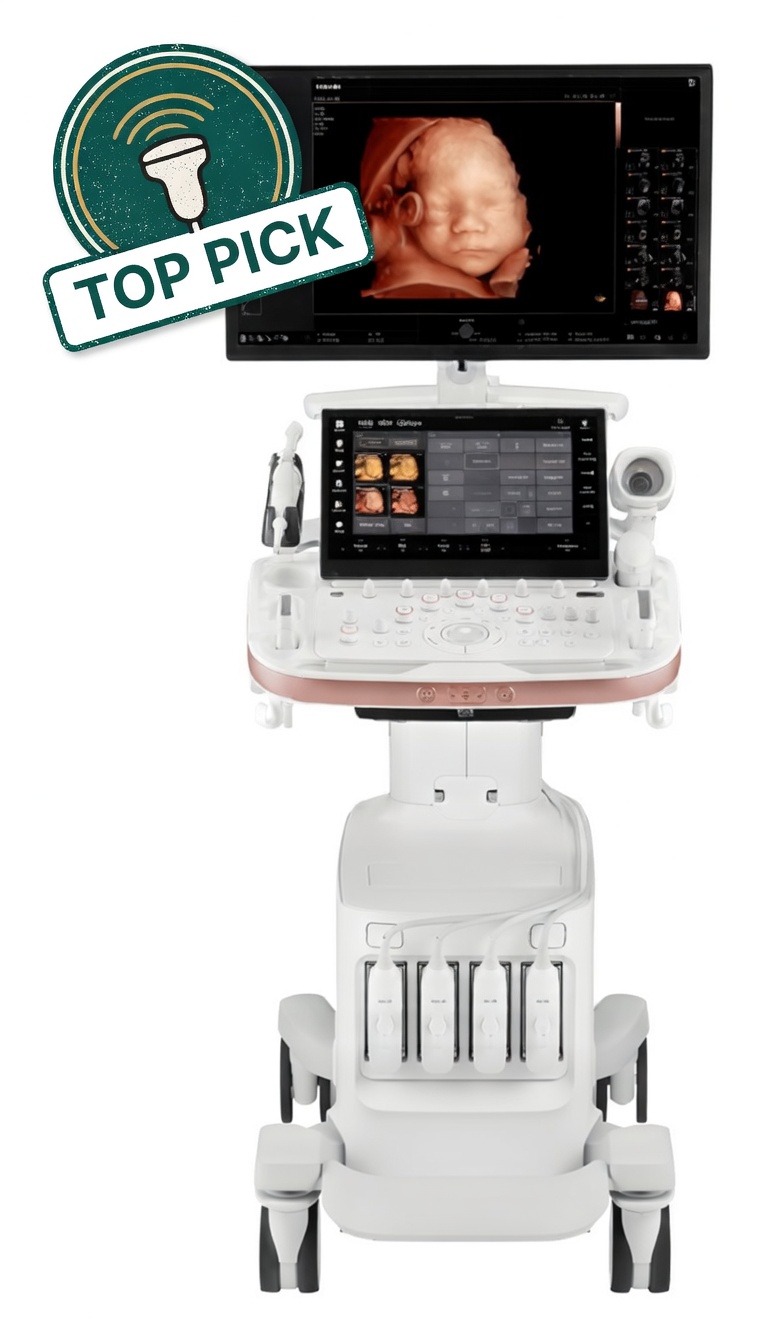
I have been a GE user for over 20 years. I have worked with GE devices for a long time and have deep familiarity with the Voluson platform. This inevitably creates an experience bias — especially in knobology and workflow. This review was built with a commitment to technical honesty, but the reader should keep this context in mind when weighing my impressions.
B-mode image
In B-mode, both devices are very similar to each other — and do not present a significant evolution compared to previous mid-range versions, such as the Voluson S10. Pure B-mode image quality is not where these devices differentiate themselves markedly.
GE's larger screen makes a real difference in clinical practice. But Samsung's OLED delivers something that LCD cannot replicate: superior contrast, with brightness highlights that make the visual experience more comfortable — provided the operator takes care to properly calibrate the brightness. For someone who spends 10 hours a day in front of an ultrasound monitor, this is not a minor detail.
Knobology and ergonomics
This is where my bias becomes more evident — and I need to be honest about it. On the GE, the experience is surreal: my hands go directly to the controls like muscle memory, without any cognitive effort. The workflow accelerates significantly precisely because of this. It's not that Samsung is bad — it's that GE, for me, is invisible.
Regarding the motorized height and lateral control, both devices are excellent. The only negative point I identified on the GE was the auxiliary touchscreen without tilt control — Samsung, on the other hand, has tilt on the 15.6" touchscreen, which represents a point in favor of ergonomics. This was confirmed by the Samsung representative after the congress.
About the transducers: the GE eM6C G3 has the same weight as the previous mechanical probe — no regression. Samsung's CMV1-10 seemed slightly lighter to me. In both, the grip is good and did not cause discomfort during handling.
Artificial intelligence in practice — what really matters
In terms of speed and processing, including AI functions, the two devices are surprisingly close in subjective experience. I did not perceive a significant performance difference between them.
What impressed me the most about both devices — and what I consider the most relevant AI advancement applied to ultrasound so far — was not the automatic measurements, nor the rendering, nor the fine adjustments. It was the checklist with real-time image validation: the system alerts when a mandatory plane has not yet been acquired and, upon acquiring it, evaluates whether the image is technically correct — whether the 4-chamber view, for example, contains all the elements it should contain. This exists in both devices. And it is the type of tool that changes the diagnostic quality standard silently and consistently.
The automatic auto-adjustment works reasonably well. But the experienced ultrasonographer will always feel compelled to make micro knobology adjustments — and is right to do so. AI will improve greatly over time, but it does not replace the specialist. On the contrary, it amplifies what they already do well.
Samsung has a differentiator that I was unable to explore in depth due to limited time with the device: the ability to create and customize your own checklists and workflows. For those who have extended access to the equipment, this could be a real differentiator. Noted for the record.
3D/4D rendering
No significant visual difference between the two — and I say this candidly. The evolution in this area has been, in large part, marketing-driven. Samsung delivers a texture improvement in 3D images processed on the device itself via AI — something conceptually similar to what models like Stable Diffusion do with static images (I even have a dedicated section on this at drmassuca.com.br). It is a real improvement, but not a leap.
Image sharing with the patient via mobile phone exists on both devices — a feature available on Samsung since 2018. It is a nice feature, but it is not what will define the future of AI in ultrasound.
Samsung's 5D Heart Color™
What I saw at the congress was the demonstration of 5D Heart Color™ — a tool available on Samsung devices since 2018, which generates 9 standard fetal echocardiography planes with color Doppler from a STIC volume, with automatic structure identification via AI. The technology is mature and clinically established. What I await with real interest is EzHQ — expected for the 2nd half of the year — which will bring automated quantification of fetal heart global strain (GLS), placing Samsung in a directly competitive position with GE's fetalHQ2 in this segment.
This review was submitted for technical review by Samsung Medison Brazil prior to publication. The Samsung technical team's contributions were fully incorporated into this version — including the explanation of SWBF and the 3rd harmonic, the correct hierarchy of AI tools (BiometryAssist / ViewAssist / Live ViewAssist), the precise description of 5D Heart Color™, and information about EzHQ.
GE Healthcare was contacted through channels available to the author. Despite the good personal relationship with the company in Brazil, it was not possible to obtain a formal technical review by the time of publication — which the author understands as an institutional limitation, without any judgment. The author remains open to receiving technical counterpoints from GE — which will be incorporated with the same rigor and transparency applied to the Samsung review.
Found a technical error or wish to contribute additional data? Contact: drmassuca.com.br
References (Vancouver)
- Samsung Medison. Samsung Unveils Premium OB/GYN Ultrasound System 'HERA Z20' in ISUOG World Congress 2024. Samsung Global Newsroom, 2024.
- Samsung Healthcare USA. Z20 Women's Health Ultrasound. usa.samsunghealthcare.com
- Samsung Healthcare. HERA Z20 – Features. samsunghealthcare.com
- Samsung Healthcare. HERA Z20 – Overview. samsunghealthcare.com
- AI Insider. Samsung Introduces AI-Powered Ob-Gyn Ultrasound. 2025. theaiinsider.tech
- Samsung Healthcare USA. Z20: A Revolutionary Leap at SMFM 2025. samsunghealthcare.com
- GE HealthCare. Voluson Expert 22 – Datasheet DOC2668404. 2022. PDF oficial GE HealthCare
- GE HealthCare. Voluson Expert 22 Ultrasound System. gehealthcare-ultrasound.com
- GE HealthCare. Voluson Expert 22 – Imaging Capabilities. gehealthcare.com
- GE HealthCare. Voluson Expert 22 – Workflow Efficiency. gehealthcare.com
- GE Voluson Club. AI Innovations. volusonclub.net
- Heart Medical LLC. GE Voluson Expert 22 Review. heartmedical.com
- ICE Community. GE Healthcare Voluson Expert 22. theicecommunity.com
- AuntMinnie. GE introduces Voluson Expert 22. auntminnie.com
- Diagnostic Imaging. GE Healthcare Launches Voluson Expert 22. diagnosticimaging.com
- Medical Device Network. GE Healthcare introduces Voluson Expert 22. medicaldevice-network.com
- RadAI Slice. HERA Z20 – FDA 510(k) K241971. xrayinterpreter.com
- Mäkikallio K et al. Reproducibility in Fetal Cardiac Analysis with FetalHQ. PMC. 2025. PMC12112619
- Merz E et al. Midtrimester Fetal Heart with FetalHQ. J Clin Med. 2026;15(4):1352. mdpi.com
- Zhang Y et al. Fetal heart in growth restriction using fetal HQ. BMC Pregnancy Childbirth. 2024. springer.com
- GE Voluson Club. Fetal Heart. volusonclub.net
- Samsung Newsroom Brasil. Novo sistema Samsung chega ao Brasil. samsung.com/br
- SonoImagem Sistemas Médicos. Ultrassom Samsung. sonoimagem.com
- GE HealthCare Brasil. Sobre a GE Healthcare. gehealthcare.com.br
- Siemens Healthineers Brasil. Parceria Escola Nexus. siemens-healthineers.com
- Escola NEXUS. Curso Medicina Fetal Barcelona. nexusultrassonografia.com.br
- Escola NEXUS. Conheça a Nexus. nexusultrassonografia.com.br
- CICB. This Is Us – Congresso Internacional de Ultrassonografia. 2023. cicb.com.br
- SBUS. Selo de Qualidade para Escolas de US. sbus.org.br
- MedicalExpo. HERA Z20 – Samsung Healthcare Germany. medicalexpo.com
- Bimedis. GE Voluson Expert 22. bimedis.com
- Korea Biomed. Samsung Medison at KSUOG. koreabiomed.com
- Samsung Medison. Leads Women's Health at ISUOG 2025. samsung.com/global
- Medical Device Developments. Samsung unveils HERA Z20. medicaldevice-developments.com
- Boston Imaging. Samsung Z20 at SMFM 2025. bostonimaging.com
- Samsung Medison. Samsung Showcases Enhanced Portfolio at RSNA 2024. samsung.com/global, 2024.
- Boston Imaging. Z20: A Revolutionary Leap at SMFM 2025. bostonimaging.com